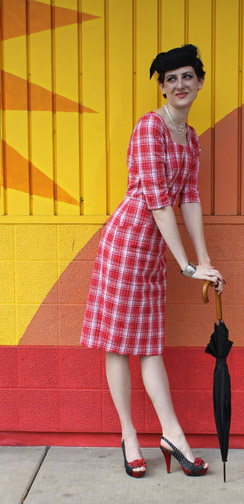
Tuesday, April 30, 2013

Make a Wedding Dress for $100?

Making a wedding dress doesn't have to be this massive effort, nor does it have to be expensive. I did make a few minor changes to Fantasia (Sew Chic #9005) to make her into this bridal beauty, and with these few simple additions and substitutions, you can do the same! If you need to make pattern size adjustments, see my Pattern Resizing Tutorials, Part 1: Small to Large or Part 2: Large to Small and truly customize every inch of this once-in-a-lifetime dress!

The base fabric I used is a crisp nylon taffeta in a soft grayish mint color. The color is especially lovely under the white beaded lace with a bordered edge from JoAnn Fabrics (still available) from their Bridal Inspirations collection called "White Heather Bridal Mesh" for $24.95/yd. To get the yardage amount, I measured the pattern along all the edges I wanted trimmed with the lace border, and then divided that number in half  (because both edges of fabric have border).

The neckline front and back, the sleeve, and the hem are all trimmed with the border of this lace fabric. It was around 3.5 yards of fabric if I recall, so not too much.

You are thinking- but wait! the hem is curved, and that border is straight! I stayed with the curved hem with my base fabric but because lace doesn't fray and the grain is more forgiving, we are able to disregard all pattern grain lines and cut out the fabric in any way we need to. Here's how I do it:

Align the center of the curved edge of the pattern closest to the border, then extend the sides of the pattern to the end of the fabric. Just make sure your extension will be similar to the side it will sew to. You can see that this creates an angular hem once stitched together, which is beautiful, fast, and a carefree way to sew with straight edged lace. 

To trim the sleeve with lace, I substituted the normal cap sleeves with tulip sleeves, but instead of a curved edge, I gave it a straight edge.  Here's the link to my tulip sleeve tutorial http://www.sewchicpatterns.blogspot.com/2011/04/make-your-own-tulip-sleeve-tutorial.html 
Finish the sleeve edges and sew underarm of the base sleeve seam, then baste the lace over the top
Instead of the wide sash, we substituted a wide organza ribbon and simply hand sewed 3 beaded medallions to the front. This easy tie was in keeping with the delicate nature of the gown.

If you've never sewn with beaded lace, here's a few more tips that will help you:
  • Once you've cut out your pattern, remove all the beads and sequins along the seam allowance. 
  • Tack each bead strand to the mesh fabric and knot them individually or the beads will begin to fall off. 
  • After cutting out, baste your lace to the base fabric on the bodice only. 
  • Use a zipper foot to sew all seams.
  • After sewing, trim the seam allowance to less than 1/4".
  • I keep the two layers free at the sleeve and the skirt except for the front darts and at the zipper.
  • I sewed a wide bias of self fabric to the hem. This acted much like horsehair braid, but cost less.
  • Wear your dress with a petticoat if you want your skirt to be full at the bottom like ours is. 
 So what did I spend?

I found the taffeta (3.5 yards needed, but I bought a bit more) at Walmart in the $2 yard bin, which really helped to keep the cost down! (about $10)
The lace I bought with a 50% off coupon. ( about $45)
interfacing, zipper, spool of ribbon, thread (about $10)
Beaded medallions, also purchased on sale (about $15)
and the pattern ($18.95)
 TOTAL = $98.95


I bet you didn't know that a wedding dress could cost less that $100 and be so easy to make!
You can buy the Fantasia pattern at Sew Chic Patterns.com/Fantasia.html
 

Sunday, April 14, 2013

Side Zipper Sewing Problems and Solutions

I wore Beatrice to church one Sunday and a friend of mine, noticing it was a new dress, inspected both front and back carefully and was very complimentary, saying it might even tempt her to try sewing again. Then after a moment of silence, she asked hesitantly "How do you get into it?"


Yes, a side zipper can easily go unnoticed (AND is easy to reach!), but I also love a side zipper because:
  • Tucked neatly under the arm, a side zipper in an off color is less noticeable
  • A 14" length (vs. 22" for a back zipper) is less expensive
  • No dealing with neck edges and facings
  • A lapped zipper is easier to sew 
However, a flawless installation does not happen automatically. There are several problems to watch for, and I'll go through them one by one:
 Problem A: The stitching is puckering up on one side and you have extra or not enough fabric on one side or the other.
What is happening: The front and back side seams openings are not the same length.
 How to check it: Match the front and back to each other the entire length. You can see that one side is much longer than the other. Now let's talk about problem B, which has the same solution.

Problem B: The waist seams don't match up.

What is happening: You may have the same length, front to back, but the top to bottom are offset just enough to keep the waist seams from matching correctly.

Solution to problem A and B: You need to find out which piece is too long/short. Is it the front or back/ bodice or skirt?

Pull out the paper pattern and match it up to both the skirt and the bodice, both front and back, to find out which one needs the correction. In this case, the bodice allowance isn't accurate. Start by ripping the seam out back to the point where the seam diverges from the pattern.

 Place a pin to mark the match point.
Pin everything back together and check it to make sure it still matches. Now sew.

Problem C: We've got both sides the same, but sewing the lapped side of the zipper with a perfectly matched waist seam is difficult!
What is happening: You've pinned  your lap to the zipper tape over and over again, but still the waist seams do not match up once sewn. Figuring out just where and how to perfectly match seam to seam on the zipper tape, along with the natural drag of the zipper foot can  easily put everything completely out of alignment.

Solution to Problem C:
Mark your waist seam line on the zipper tape with a pencil, chalk, or erasable marker. We have marked two lines because we need to center the piping.
Sew the seam allowance to the zipper tape to make sure everything stays in place.
Then check your work before topstitching.
Use a walking foot to top stitch, measuring an even distance from the fold. Make sure you've given enough clearance and that the stitching will be on the right side of the teeth. A walking foot picks itself up with every stitch, which means the fabric is feeding evenly the length of the zipper.

Problem D: No matter how hard you try, there is always a "bump" in the top stitching at the end because the zipper pull gets in the way.
What is happening: You can't figure out how anyone could have straight stitching at the end of a zipper! The pull is too large. The zipper foot can't get past it,  you have an unsightly zag in the stitching.

Solution to Problem D

 Stop your stitching BEFORE you get to the zipper pull. With the needle in the DOWN position, raise the foot and push the zipper pull well past the foot.

 Lower the foot.


 Finish sewing to the end, pivoting at the corner just past the top stop. Use this method of moving the pull any time it keeps you from sewing a straight seam.

We have one lovely side zipper we can be proud to wear! Don't you just love a dress that looks great both coming and going?

Tuesday, March 19, 2013

Spring Styles Unveiled at Expo!

We had a GREAT time at the Sewing and Stitchery Expo in Puyallup, Washington last month. If you missed it, I can highly recommend this show to everyone who loves garment sewing. Yes, there are classes and vendors for quilting, but the split is fairly equal. Every year, Vogue Fabrics, (available online at http://www.voguefabricsstore.com/) comes to the show with rolls and rolls of beautiful fine fabrics at fantastic prices. It was all I could do to keep from taking it all home myself!

As a new vendor, everyone was so very welcoming. It is customary for all to wear ones own designs, and I was no different. Since there were only 4 days, there wasn't time to wear them all! I had to pick carefully. At the show I unveiled 2 new styles, Tia and Beatrice. The day I wore Beatrice, EVERYONE said I looked like Jackie O., that, or they mentioned Madmen. I've never seen that show, so one customer pulled up a photo of one of this actresses on her phone to show me what they were talking about:

Wow. To say I look like that is stretching it just a little...but I did receive plenty of compliments from everyone, and even the men-- however few there were. A fellow vendor at the end of my isle stopped me on the third day to say that he had noticed me every day, and that he wanted to tell me in the kindest way, how nice I looked. WHO wouldn't like that?? Now you want to know what is this dress that makes everyone think of a voluptuous Madmen actress in pink?

Please, let me introduce you to the Beatrice Pocket Dress. I love a dress with pockets, but these aren't ordinary pockets, they are interior kangaroo pockets. We've made our dress out of satin and lace, but this simple dress with upscale details could be made of just about any fabric.  
I didn't wear Tia, but I didn't need to. She got all the attention she needed at the Expo. This was also the debut style for the Saturday ASG fashion show. Everyone asked me about the fabric, but I couldn't be very helpful I got the fabric out of  my Aunts stash. It had been lingering there, unused, for far too long and she was ready to give it up. The minute I saw it, I knew it had to be a fun, full, flirty spring dress. Though we cannot get that fabric anymore, this style with a great contrast trim would look great in just about any kind of light to medium weight printed fabric. Perfect for your stash fabric too!
I am so excited about this last style because I have wanted to make it into a sewing pattern for a very long time now! I did this design several years ago for a competition, where it won a cash prize of $1000.  Now I know that's not like winning project runway or something, but that money helped in the start up of what would become my pattern line. Do you agree this dress is the very essence of stylishness? If you don't have an up coming event to wear this dress, I recommend you get your calendar right now and invent one!

Head on over to the shopping page where you can read the descriptions, see all the photos, and yes...I hope you'll take one or all of these new spring styles home with you today!

http://www.sewchicpatterns.com/shop.html

Saturday, February 16, 2013

Come see me: Sewing and Stitchery Expo

It's nearly time for the SEWING and STITCHERY EXPO in Puyallup Washington, and we at Sew Chic are excited to meet you in person! If you weren't already planning to attend this show, it's not too late to make it happen. Many classes are still open and of course the shopping is fantastic because anything and everything sewing will be there for you to see, touch, try, and take home!  The dates are Feb 28- Mar 3 at the Puyallup Fair and Events Center. Come see me at booth # 928, (way in the back) and be the first to preview our newest pattern styles. For you true retro girls with advanced sewing skills, we will have a new "advanced" cocktail style that will knock your socks off. Please let me know you are on my mailing list too!

I will be teaching two classes. One will be on the free stage in the Showplex building called Abounding in Gowns at 9:30am, Thursday and Saturday. I will be showing you a few of the bridal gowns I have designed and some of the evening gowns that were made specifically for, and accepted into a juried competition. For a gown to be accepted by a jury, it must be unusual, special, or interesting. To win, it must be impressive. Through the presentation, I will talk with you about the construction and techniques that provide the structure for these gowns. You might be surprised at how easy it can be!

The second class is also in the Showplex, room C, called Contemporary Vintage, #1063 at 1:30, Friday and Sunday. Last I checked, there was a bit of room still, but the friday class is filling faster. In this class, it will be a bit of a study of sewing patterns from 1930's to about 1980's. I will go over the basics of what to expect from these patterns based on the times and technology available so you can successfully get along with a vintage pattern. You may be surprised to learn how drastically the sizes, body shapes, terminology, techniques, visuals, and sewing knowledge and skill have changed compared to modern times. Last touch on how to make a modern pattern look vintage or switch a vintage pattern to look modern.  
For more information about the show or to sign up for classes, visit http://www.sewexpo.com/

Hope to see you there!
Laura

Sunday, January 27, 2013

Fitting Pants from the Rear

Today I came across Leena's website at http://www.leenas.com/English/draw_women_pants.html with a great tutorial for drafting your own pant pattern using the Scandinavian drafting method. She's done a very good job of organizing the procedure with charts for measurements and ease.  Drafting a standard pant from measurements is about the same, no matter what method you use. Everything is added, divided up, and placed on paper using our curved and straight rulers.

The problem comes in when our bodies are not so evenly divided. Even with drafting, we still use a standard way of laying it on paper. In my experience, drafting can get us only so far, and by no means eliminates the need for fine tuning.

There must be literally millions of blog pages full of fitting woes and solutions, but these last few weeks I've been working with a private client and this week and I did her pant fitting. I thought I'd share my observations with you.

My drawing below is a similar shape to what the pattern pieces look like, with the black being the front pattern and the red being the back. Pants can be drafted side by side, or the front is drafted first, and the back built off it. Either way, the center back crotch is tipped outward to make room for our rear. How much it should tip depends upon how much rear we have. If your rear is more flat than the standard then your pattern should tip less. If your rear is larger, then your pattern should be tipped more to make enough space. The green lines roughly represent those differences.

 When dividing up the crotch space, the back gets more than the front, but for someone with a large rear, the crotch should have an even deeper scoop and longer length than the standard shape.
 And the pattern shape for a flat rear will have less curve and length to it.
   
 The standard pattern change is to take in or let out using a horizontal dart cut from center back, creating the same shape as described.  Understanding the relationship of the figure to the shape of the patten can go a long way with the fit before we ever get started, and can hopefully save us hours upon hours of fitting changes and muslin making. Cheers to all us fat/flat bottom girls!


Saturday, January 12, 2013

Darts in Clothing that hit the Bullseye


This morning I gave a presentation to my local group of American Sewing Guild members. I'm sure you'd like a picture of it, but I can never remember to take photos of the (interesting?) things I do when I'm out and about. I forgot again. Anyway, the topic was darts.

To get us off on the right track, here is a quiz for you. A dart is widely understood to be:


A) The stinger of an insect.

B) A game in which small, slender, pointed missiles are thrown at a target.
 
C) A sudden, rapid movement.
 
D) A fold sewn into fabric to help provide a three-dimensional shape to a garment.


Though I have moved quickly to avoid being stung by a bee while attempting to hit a target with a small slender missile, I am really best qualified to speak on the three-dimensional fabric type, which I think are largely misunderstood. Here are the basics:

See how nicely those imitation darts (dotted lines) fit so well into the curves of our lady? The main point I would like to make about darts is that 1) the type, shape, length and width need to be personalized. One dart cannot be all things for all people. It can be for some, but not all. Let's see how those lovely darts look on someone of a different figure type:
You see what I mean- Not such a good match up.

The next thing to keep in mind is that a dart should never be longer than the apex of the curve it will be fitting.

So, what happens when a dart is too big? You'll end up with a big poof or bulge where you don't need it, as in the Sewing Lawyers experience with Vogue 1324.

The photo I want you to see:

https://blogger.googleusercontent.com/img/b/R29vZ2xl/AVvXsEgrtBBPD0HxZ15zcq34WHRRcNMl_hzulX3sPh2WSvizaqfU9dCjoxX1Yiuadws2p2Cuc9WN6HRTIckWpjDN36YIrgrxHEnmKjLI4CcYB2AP8gJima8HJrddYKEy_Av_zugJ5z-fEzqgZm4/s320/IMG_1002.JPG

The whole blog post: http://kaythesewinglawyer.blogspot.ca/2012/09/fits-and-starts.html

Okay, but how to fix it? Make the dart smaller (draw in a smaller dart, and not so long) and then take another avenue to reduce the now too large waist.

So What happens if a dart is too small?  You'll see drag lines and/or pulling, but be careful because the cause may not be the darts at all. You might think these draglines point to a need for a full bust adjustment as with Kadiddlehopper when she made Sew Chic 7401:

https://blogger.googleusercontent.com/img/b/R29vZ2xl/AVvXsEh8-UCXdTMKzTyWUug_S2eSuHY2-wNzk2VrE_CJudErESgOyNn-IFQ-t2F6qwzg-5NM3GjKLdfukOZR8I9iiIQCupaBpERb8wLAqvjmzWb2-v1V5zHBUCKTmyMuGUalRDB8D7PaRdJ3i9A/s320/IMG_5478.JPG        

The right solution to this problem may surprise you. Read about it on her blog here:

http://katiekadiddlehopper.blogspot.com/search?q=myrtlewood#!/2010/01/myrtlewood-muslin.html 

Sometimes a pattern comes without any darts when it really needs one. Read about our experience with Butterick 5601.

http://www.sewchicpatterns.blogspot.com/2012/11/when-dart-will-do.html

I challenge you to look for new ways to use darts for fitting. Of course they can be both friend and foe, but when used right, they work wonders!


Saturday, January 5, 2013

The Pieced Skirt using the Starter Pattern

This week I did a photo shoot with my model, and we really pick a lovely day for it! The sun was shinning and the air was cold but clear. For just a day we thought it was Spring while tromping around with our rack of clothes and a camera for 5 hours. We got some beautiful pictures! My pieced skirt is one that I can share with you now. I did this pattern especially for the ASG conference (LA, Aug. 2011!).

It is the ultimate for those of you who love quilting or want total creativity and control, and is very earth friendly!

CREATING DIGITAL FABRICS

  • The textile pattern was created digitally on my computer using Photoshop, so the the colors in the two fabrics match perfectly.
  • The fabric was then printed directly onto my  prepared-for-printing 100% cotton fabric using my standard inkjet printer. (YES! It's machine washable!)
  • The size of the skirt pieces were purposely sized small enough to fit onto a standard size page, and designed to eliminate waste.
  • I turned my textile pattern to look like it's bias, while printing on the fabric grain the length of the page.
  • I used scrap fabric that would have otherwise been tossed out.
  • The expense went into the 100% silk organza on the bottom, which makes this skirt look fabulous!

THE PROJECT PATTERN
It all started with the Sew Chic Patterns Starter Skirt, #LN1000, view A (8 gore). Instead of using one of the waistbands, I used bias binding to finish off the waist. Reinforce that finished waist measurement though, as it will easily stretch out of shape.

I encourage you to try this yourself! If it's your first time, start with a simple style, whatever you make.

VINTAGE FABRICS TUTORIAL CD
For those of you short on time and just interested in learning how to make and print your own digital fabrics, great for quilting and other piece work (like this skirt), I've created a tutorial CD that includes a digital copy of this fabric you can print yourself, along with more than 300 digital vintage prints arranged by era taken from actual fabric, and a tutorial for how to make your own fabric designs at
https://sewchicpatterns.com/product/print-your-own-vintage-fabric-cd/

FREE OFFER

To make this exact skirt, you'll need to buy the Starter Skirt from Sew Chic Patterns here. Want the complete instructions? For my blog readers only, with the purchase of this pattern, include a NOTE TO SELLER at checkout and let me know that you read this blog and want the instruction sheet for the "Pieced Skirt." We will send it along FREE  with (paper) or after (PDF) your Starter Skirt pattern purchase. These instructions includes the story of how I came up with the skirt idea, layout and construction notes, and the pieced skirt pattern set in size 10. I'm sure it will inspire you to come up with your own great ideas too!

It's time to have a really great sewing day!  

Laura